
If you encounter a person in direct threat of bodily harm call 911!
Adult Protective Services 24-Hour Hotline: (888) 832-3858
Scroll down for more resources.
Adult Protective Services 24-Hour Hotline: (888) 832-3858
Scroll down for more resources.
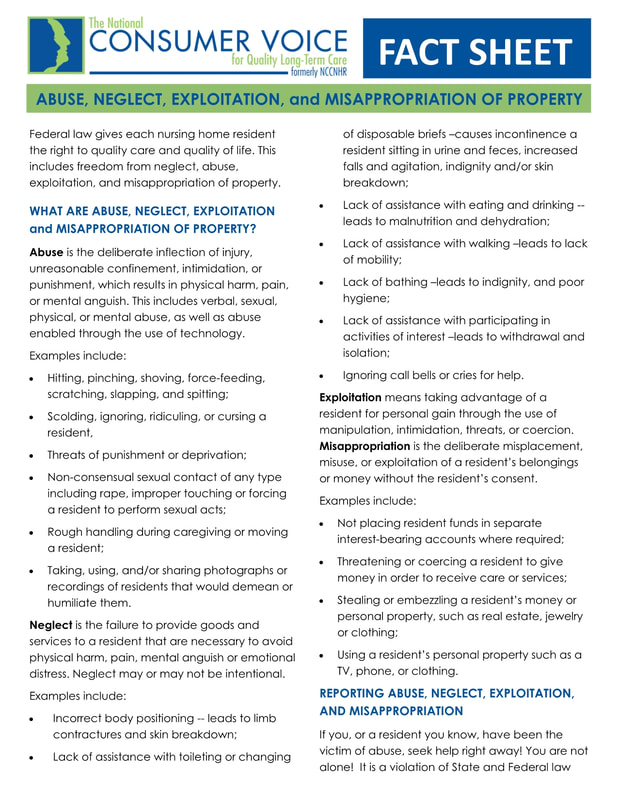
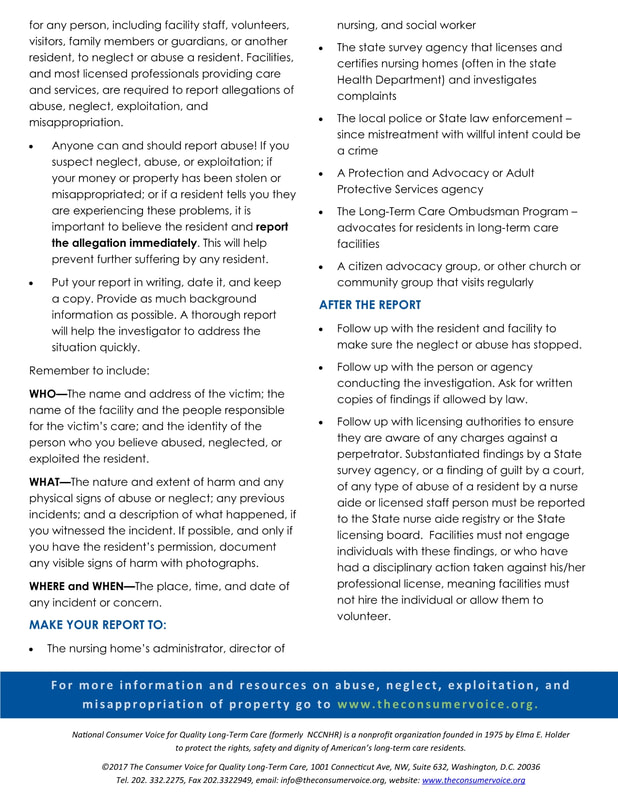
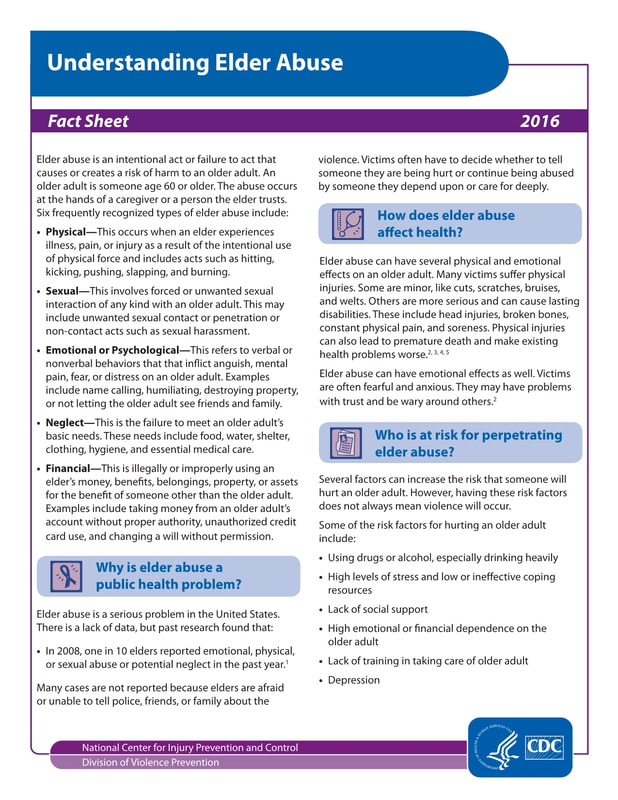
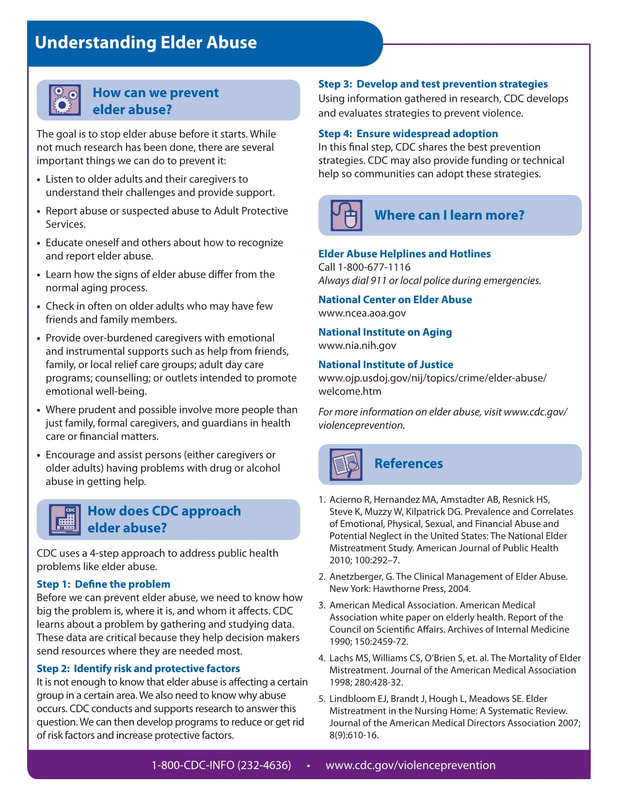
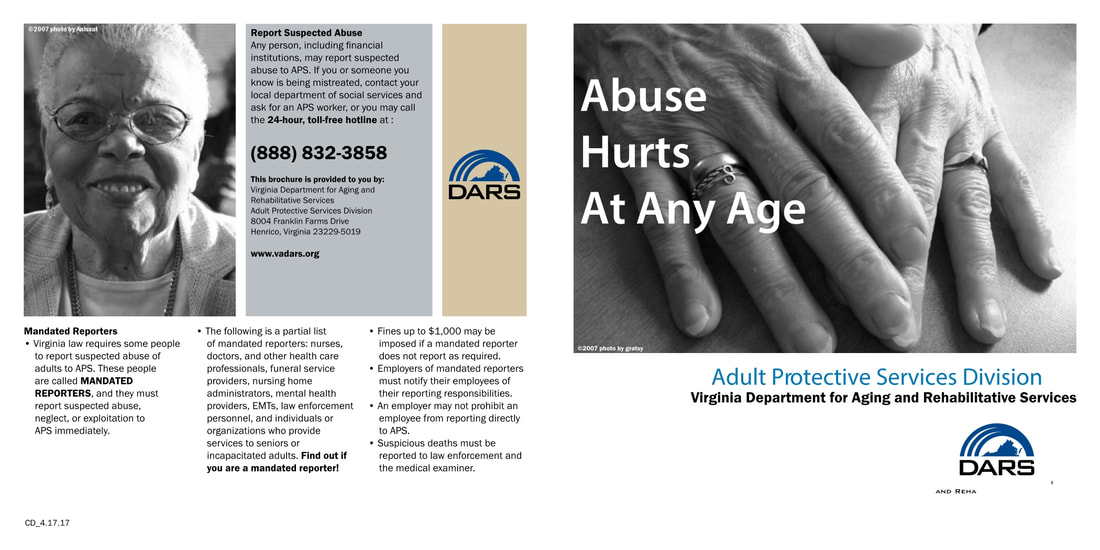
What is Elder Abuse?If you think you or someone else might be experiencing abuse, then it probably is abuse. Elder abuse occurs much too frequently and often goes unreported, especially among those who are physically or mentally incapacitated - meaning they can't help themselves or prevent themselves from being a victim. The National Adult Protective Services Association lists the types of elder abuse:
|
- Physical abuse: may include slapping, hitting, beating, bruising or causing someone physical pain, injury or suffering. This also could include confining an adult against his/her will, such as locking someone in a room or tying him/her to furniture.
- Emotional abuse: involves creating emotional pain, distress or anguish through the use of threats, intimidation or humiliation. This includes insults, yelling or threats of harm and/or isolation, or non-verbal actions such as throwing objects or glaring to project fear and/or intimidation.
- Neglect: includes failures by individuals to support the physical, emotional and social needs of adults dependent on others for their primary care. Neglect can take the form of withholding food, medications or access to health care professionals. For more information on neglect,click here.
- Isolation: involves restricting visits from family and friends or preventing contact via telephone or mail correspondence.
- Financial or material exploitation: includes the misuse, mishandling or exploitation of property, possessions or assets of adults. Also includes using another’s assets without consent, under false pretense, or through coercion and/or manipulation.
- Abandonment: involves desertion by anyone who assumed caregiving responsibilities for an adult.
- Sexual abuse: includes physical force, threats or coercion to facilitate non-consensual touching, fondling, intercourse or other sexual activities. This is particularly true with vulnerable adults who are unable to give consent or comprehend the nature of these actions.
- Self-neglect: involves seniors or adults with disabilities who fail to meet their own essential physical, psychological or social needs, which threatens their health, safety and well-being. This includes failure to provide adequate food, clothing, shelter and health care for one’s own needs. You can learn more about self-neglect here.
Some Warning Signs
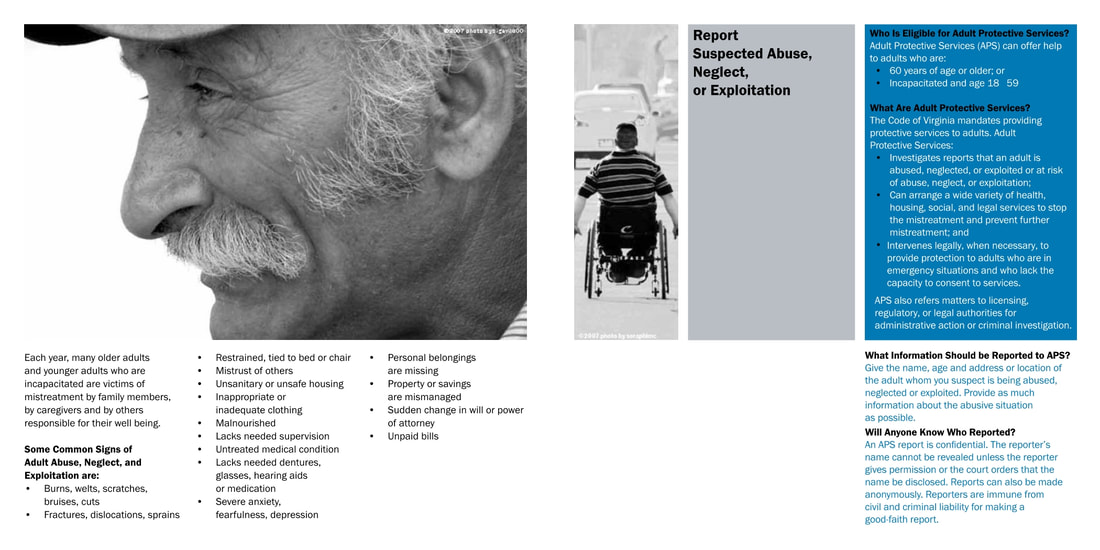
Elder abuse can take many forms. Sometimes signs of abuse are "silent" or hard to detect, giving the perception that everything is ok. Following are some warning signs that a person may be experiencing abuse:
- Cuts, fractures or bruises, especially if they are recurring
- Depression and/or anxiety
- Demonstration of fear
- Unexplained weight loss
- Missing glasses, teeth or hearing aids
- Personal belongings are missing
- Restrained - tied to bed or chair
- Unsanitary clothing, home conditions or other
- Housing that is not safe
- Locks on bedroom doors
- Unpaid bills
Resources
Abuse Fact Sheet (National Consumer Voice for Quality Long-term care
adult protective services
Adult Protective Services 24-Hour Hotline: (888) 832-3858
What is Adult Protective Services?
Adult Protective Services (APS) is a social services program provided by state and/or local governments nationwide serving older adults and adults with disabilities who are in need of assistance. APS workers investigate cases of abuse, neglect or exploitation, working closely with a wide variety of allied professionals such as physicians, nurses, paramedics, firefighters and law enforcement officers. Every state has their own distinct APS system and programs vary from state to state in respect to populations served, services provided and scope of the program.
- from the National Adult Protective Services Association
www.napsa-now.org
Adult Protective Services contact info by county:
What is Adult Protective Services?
Adult Protective Services (APS) is a social services program provided by state and/or local governments nationwide serving older adults and adults with disabilities who are in need of assistance. APS workers investigate cases of abuse, neglect or exploitation, working closely with a wide variety of allied professionals such as physicians, nurses, paramedics, firefighters and law enforcement officers. Every state has their own distinct APS system and programs vary from state to state in respect to populations served, services provided and scope of the program.
- from the National Adult Protective Services Association
www.napsa-now.org
Adult Protective Services contact info by county:
Please drag the table horizontally to view more columns
County |
Website |
Phone |
Culpeper |
||
Fauquier |
||
Madison |
||
Orange |
||
Rappahannock |
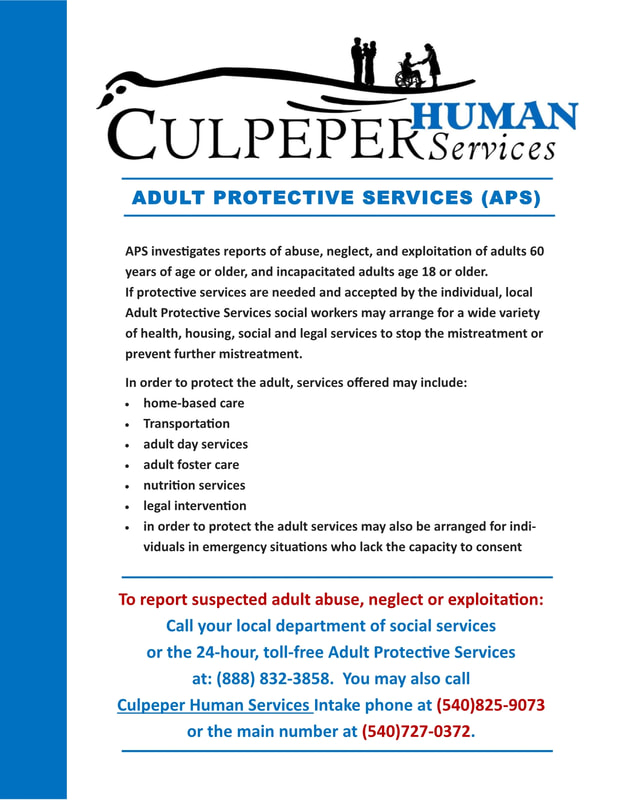
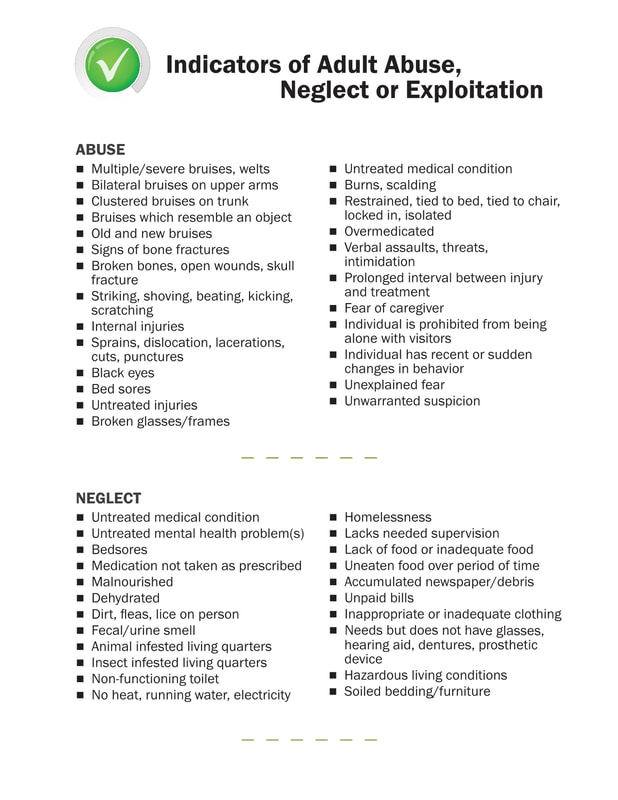
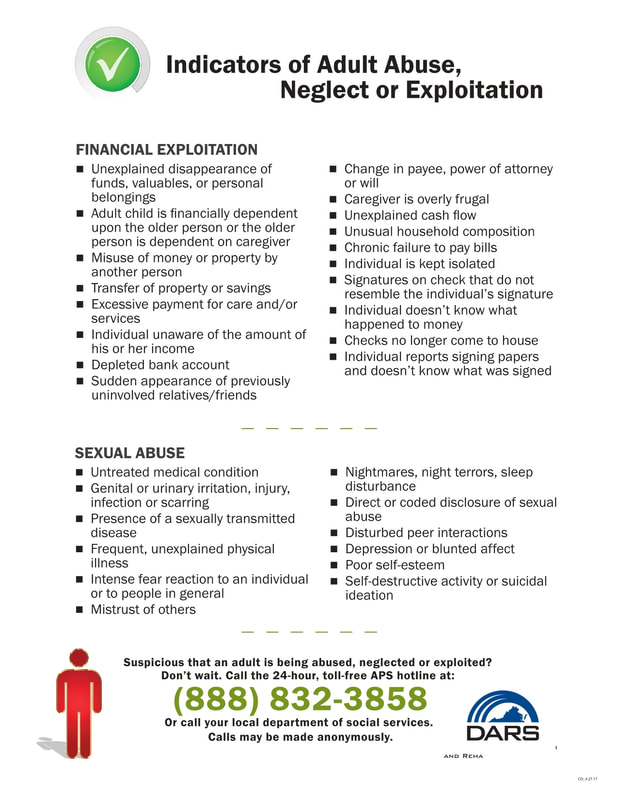
INdicators of adult abuse, neglect or exploitation (DARS)
Long-term Care ombudsman
The Regional Ombudsman works through Rappahannock Regional Community Services (RRCS) and serves the Counties of Culpeper, Fauquier, Madison, Orange & Rappahannock.
Regional Ombudsman:
Kathi Walker
540-825-3100 x3416
[email protected] (email)
What is the Ombudsman Program?
Established nationally under the Older Americans Act, which is administered by the Administration on Aging (AOA), the Ombudsman Program began in 1972. The Program is mandated to receive, investigate, and resolve complaints made by or on behalf of persons in nursing homes and assisted living facilities. The Office of the State Long-Term Care Ombudsman was launched in Virginia in 1978. The 1983 Virginia General Assembly expanded the Program’s scope to include community based long term care services provided by state and private agencies. The Program is funded through federal, state, local and charitable contributions.
To learn more about the Long-Term Care Ombudsman Program in Virginia:
https://www.elderrightsva.org/about.htm
Regional Ombudsman:
Kathi Walker
540-825-3100 x3416
[email protected] (email)
What is the Ombudsman Program?
Established nationally under the Older Americans Act, which is administered by the Administration on Aging (AOA), the Ombudsman Program began in 1972. The Program is mandated to receive, investigate, and resolve complaints made by or on behalf of persons in nursing homes and assisted living facilities. The Office of the State Long-Term Care Ombudsman was launched in Virginia in 1978. The 1983 Virginia General Assembly expanded the Program’s scope to include community based long term care services provided by state and private agencies. The Program is funded through federal, state, local and charitable contributions.
To learn more about the Long-Term Care Ombudsman Program in Virginia:
https://www.elderrightsva.org/about.htm
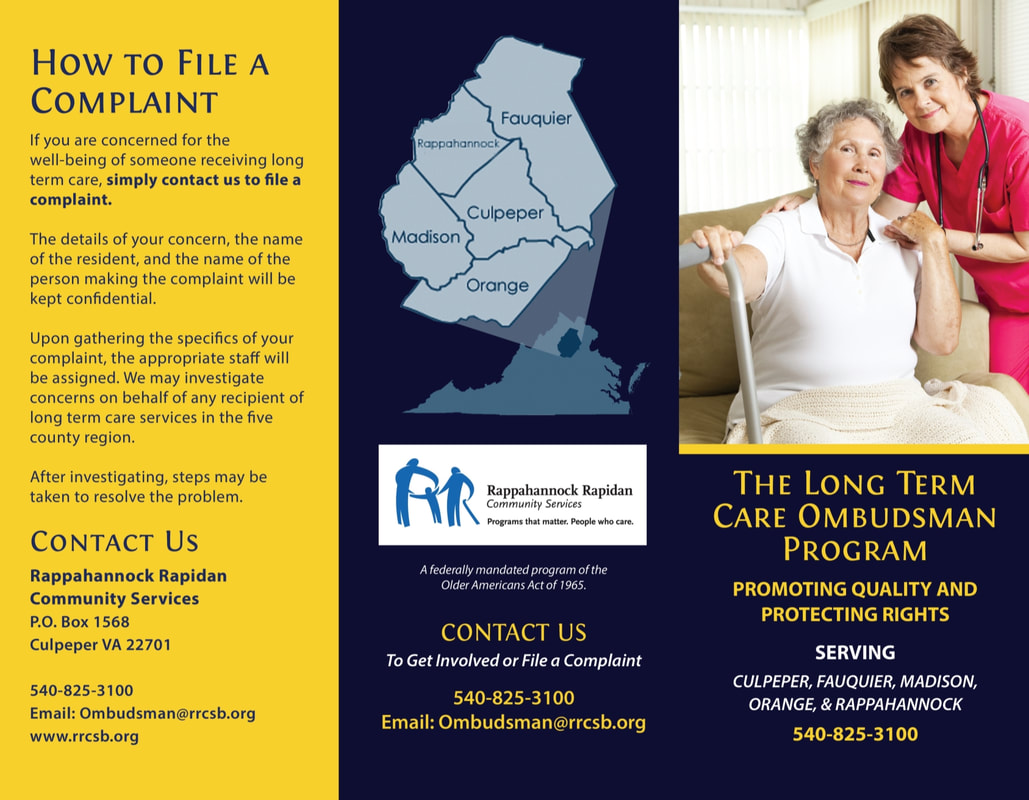
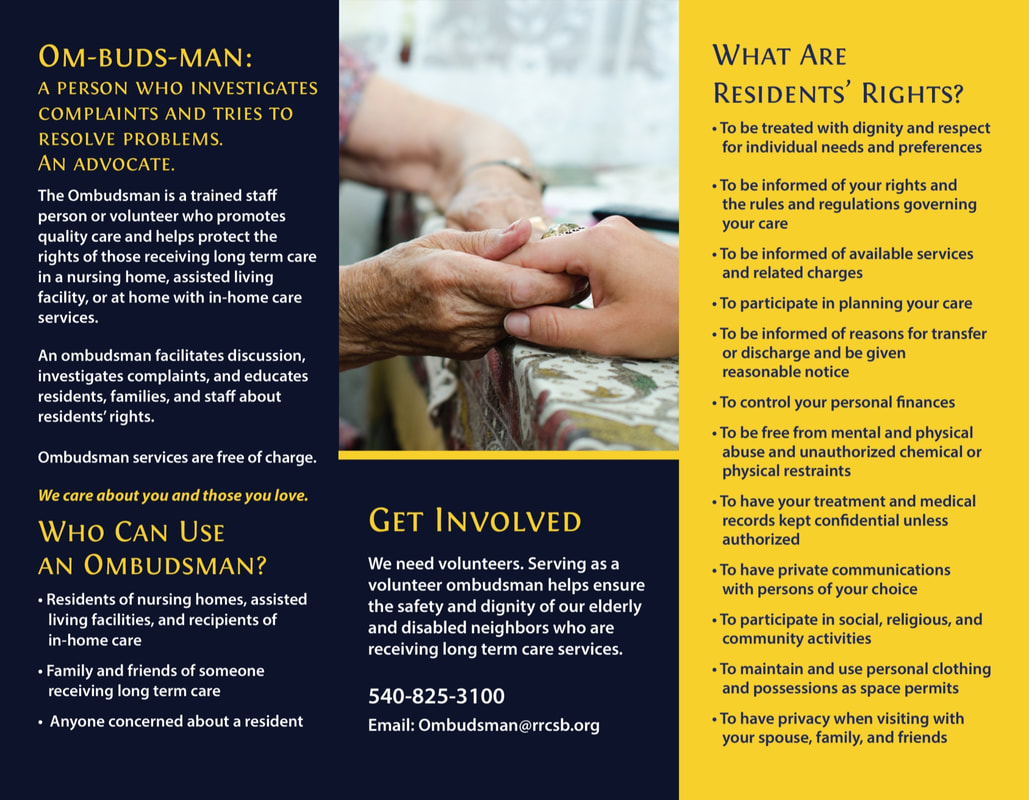
The brochure below is from RRCS and describes the regional ombudsman program and how to file a complaint.
Click on the brochure to expand or download.
Virginia coalition for the prevention of elder abuse
commonwealth of virginia ATTOrney generals office (Medicaid fraud)
The elder justice act
https://acl.gov/about-acl/elder-justice-act
Visit the ACL to learn about the Elder Justice Act. There's also a link to the full text of the act if you're interested in reading it.
To ViewFrom http://www.witness.org and http://www.ncoa.org | An Age for Justice; Elder Abuse in America, a video produced by the Elder Justice Now campaign, shows families and individuals whose lives have been turned upside down by elder abuse.
|
|
Click Button below for Information on the Elder Justice Act.