DEMENTIA education & Awareness
6 million Americans are living with Alzheimer’s Disease.
More than 11 million Americans provide unpaid care for a family member
or friend living with dementia.
Aging Together is committed to fostering community support for people living
dementia and their essential care partners so they can safely remain and
continue to engage in the community.
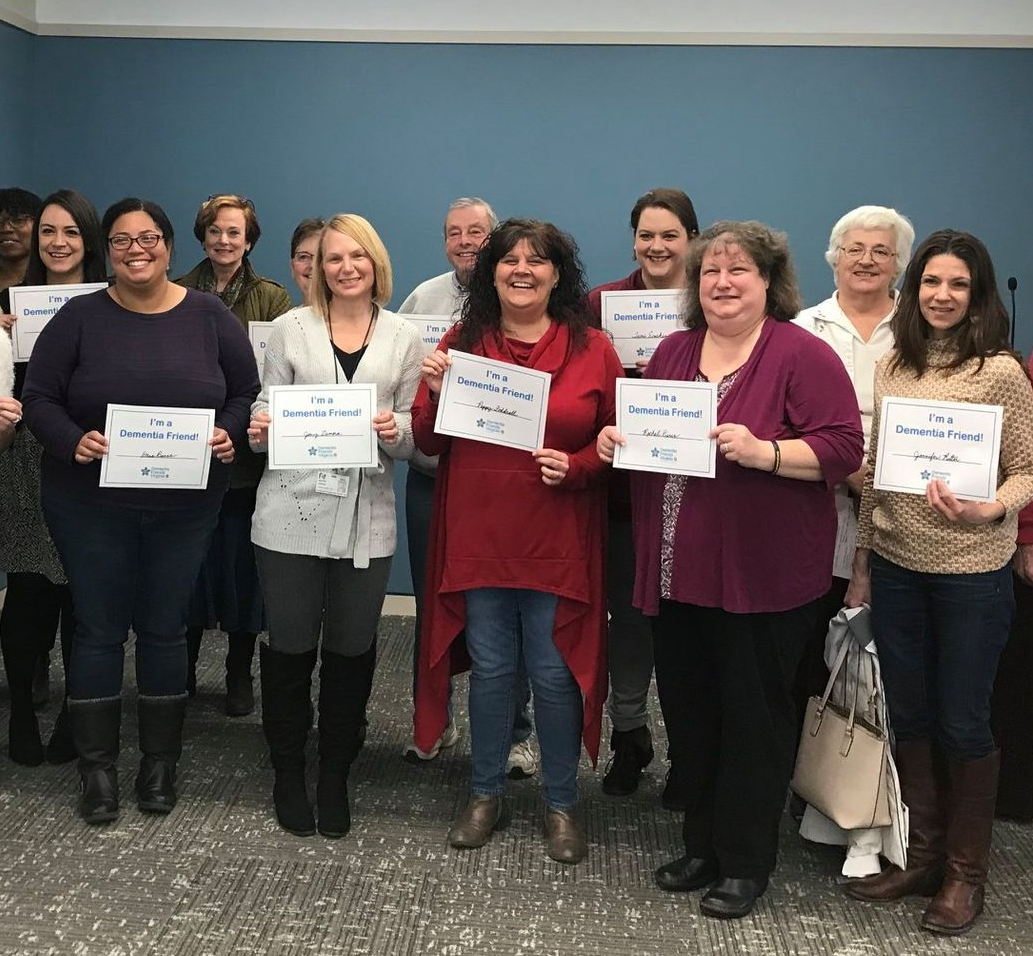
DEMENTIA FRIENDs - for individuals
To become a Dementia Friend, you participate in a Dementia Friends Information Session presented by a
Dementia Friends trainer - either an Aging Together staff person or volunteer.
A Dementia Friends session is a short, interactive, informational gathering (usually lasting about 60 minutes) designed to increase public understanding of dementia, reduce stigma, and teach everyday ways to support people living with dementia.
In a Dementia Friends session you will learn what dementia is, five key messages about dementia, and a bit about what it's like to live with dementia. As a Dementia Friend you can turn your new understanding of dementia into practical actions that can help someone living in your community. At the end of the session you will receive a certificate showing you are a Dementia Friend.
You can find out when the next Dementia Friends session is by visiting our Upcoming Programs page.
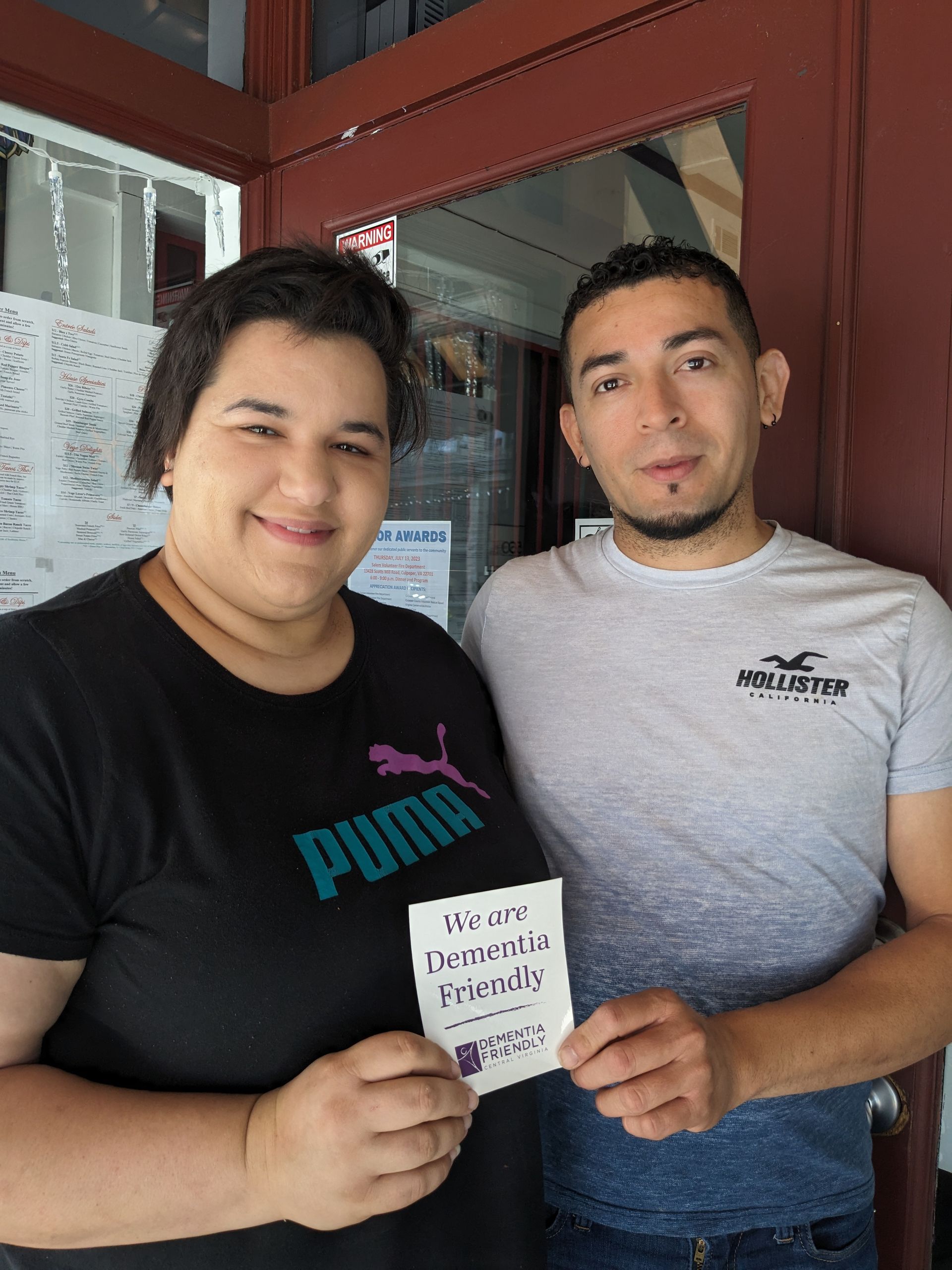
DEMENTIA FRIENDLY WORKPLACES- For Businesses
Dementia Friendly Workplace training is an initiative of Aging together as part of a greater movement both in Virginia and the country. Aging Together works under the umbrella of Dementia Friendly Central Virginia of which we are a member. Dementia Friendly Communities helps your business be comfortable and prepared when those living with dementia visit your organization. In return you open up your business to a greater population who may find it difficult to participate in their communities otherwise, and so have a propensity to stay home along with their caregivers. It's a win-win.
The Dementia Friendly Initiative is intended for any businesses or organizations in the community that are open to the public. Typical sessions last about an hour. Join the movement!
Interested in hosting a Dementia Friendly session at your business or organization? Contact us at info@agingtogether.org.
ANNUAL DEMENTIA EDUCATION CONFERENCE
(aPRIL 8, 2027 at Germanna Community College, Culpeper)
For family and professional caregivers, and anyone interested in learning more about dementia. Become informed about the latest research and helpful info related to dementia. Load yourself up with tools and support to help.
The annual 1-day conference takes place in the spring (next conference is 4/8/2027). Check our conference page for updated information.
DEMENTIA SUPPORT
Dementia Defined
Dementia Defined
Dementia is an overall term for diseases and conditions characterized by a decline in memory, language, problem-solving and other thinking skills that affect a person's ability to perform everyday activities. Memory loss is a example. Alzheimer's is the most common cause of dementia. - Alzheimer's Association
Often when one thinks about dementia they relate it to Alzheimer's Disease, which is one of the leading causes. That's because, according to the Alzheimer's Association, 5.7 million Americans are living with Alzheimer's. But there are many causes of dementia.
Some other causes of dementia include Parkinson's Disease, Lewy Body's Disease, Vascular Dementia, Frontotemporal Dementia (FTD), head injuries, infections, thyroid issues, vitamin deficiencies, and more.
Resources: Alzheimer's Association, Parkinson's Foundation, Lewy Body Dementia Association, National Institute on Aging, Mayo Clinic
Symptoms of Dementia
Though there are times when a person might experience symptoms of dementia that can be reversed with proper help, most forms of dementia, like Alzheimer's, are not reversible.
The Alzheimer's Association lists the following 10 Warning Signs of Alzheimer's Disease:
- Memory changes that disrupt daily life
- Challenges in planning or problem solving
- Difficulty completing familiar tasks
- Confusion with time or place
- Trouble understanding visual images and spacial relationships
- New problems with words in speaking or writing
- Misplacing things and losing the ability to retrace steps
- Decreased or poor judgement
- Withdrawel from work or social activities
- Changes in mood and personality
Though Alzheimer's is not the only cause of dementia, the warning signs may be similar to other diseases. Getting help from a doctor early on can help with early detection and support for dementia.
Resources: Alzheimer's Association, CDC
VIRGINIA DEMENTIA ROADMAP
The VA Dementia Roadmap is a publication of the Virginia Alzheimer’s Disease and Related Disorders Commission and the Department for Aging and Rehabilitative Services. It is a guide for people impacted by dementia.
GENERATIONS CENTRAL ADULT DAY CENTER
Add your title here
This is the text area for this paragraph.To change it, simply click and start typing. Once you've added your content, you can customize its design by using different colors,fonts, font sizes and bullets. Just highlight the words you want to design and choose from the various options in the text editing bar.

RESPITE SUPPORT
Respite is temporary relief from duties for caregivers, ranging from several hours to days. It might be provided in-home or in a residential care facility. Respite allows a caregiver to take a break and get away, maybe for a doctor appointment, grocery shopping or a weekend getaway with family. There are organizations that offer limited funding specifically to help caregivers pay for someone to be with their loved one, and care for them, while they are away.